
Hoi An Central Market Guide
Cho Hoi An — Cao Lau noodles, iconic banh mi, White Rose dumplings, fresh produce, and the heart of Hoi An's food culture
Powered by ITINE
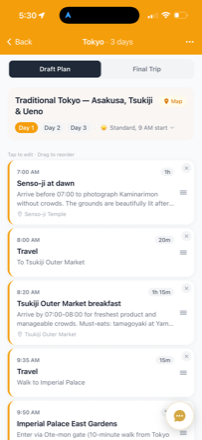
Get this guide as a tappable itinerary
Day-by-day plan, audio tours, and one-tap Google Maps — completely free.

Destinations
Your Itinerary
Google Maps
Hoi An Central Market (Cho Hoi An) is the noisy, crowded heart of the town's food culture and the best place to taste the unique dishes that have made Hoi An a top culinary destination in Southeast Asia. Situated on the banks of the Thu Bon River at the eastern end of the Ancient Town, this vibrant market has been a center of trade and daily life for centuries.
Walk in and the smell of fresh herbs and grilling meat hits you first, then the bright stacks of tropical fruit and flowers, the sizzle of Cao Lau being tossed in hot woks, and the warm calls of vendors inviting you to try their specialties. Early morning is the most atmospheric time, when fishermen unload their catch at the riverside, farmers stack mountains of produce, and the food stalls begin serving the dishes that Hoi An is famous for — Cao Lau noodles, White Rose dumplings, banh mi, and com ga chicken rice. This is not a tourist market but a living, working marketplace where Hoi An's residents do their daily shopping. Eating breakfast here is as authentic as Hoi An gets.
6:00-18:00
Market Hours
Free
Entry Fee
6-9 AM
Best Time
Riverside
Location
Essential Information
The market operates from 6:00 AM to 6:00 PM daily. Food stalls are busiest from 6:30 AM through lunch (around 1:00 PM). Fresh produce and flowers are at their peak from 6:00-9:00 AM. Entry is completely free — the market is a public marketplace, not a ticketed attraction. Some afternoon vendors begin packing up after 3:00 PM. The market is open every day including weekends, with reduced activity during Tet (Lunar New Year).
Early morning (6:00-9:00 AM) is unquestionably the best time. The market is at its most vibrant and authentic as locals do their daily shopping, fishermen deliver fresh catches from the river, and the food stalls serve their freshest dishes of the day. The morning light is beautiful for photography, the temperatures are comfortable, and the atmosphere is alive with energy. By 10:00 AM tourist groups arrive and the heat builds. Come early, eat breakfast, and experience the real Hoi An.
The market is organized into distinct sections. The food stalls occupy the central and northern areas with communal seating — look for the Cao Lau and banh mi vendors here. The fresh produce section runs along the eastern side with tropical fruits, vegetables, and herbs. The wet market (fish, meat, seafood) is along the river side at the back. Theflower section is near the main entrance on Tran Phu Street. Small souvenir and clothing stalls are scattered throughout. The market is compact and easy to navigate in 30-60 minutes.
Food stalls have fixed prices — no bargaining needed, and prices are very fair (20,000-40,000₫ for most dishes). For fresh produce, gentle negotiation is expected — start at 70-80% of the asking price. For souvenirs and non-food items, standard bargaining applies — aim for 50-60% of the initial price. The vendors in Hoi An are generally more relaxed than in Saigon or Hanoi. Always be friendly, smile, and remember that the price differences are often very small in real terms.
What to See & Eat
Cao Lau Noodle Stalls
Cao Lau is the signature dish of Hoi An, found nowhere else in Vietnam, and the Central Market is the best place to try it. These thick, chewy rice noodles are made using water drawn from a specific ancient Cham well (Ba Le Well) and lye from the ashes of a particular tree on the Cham Islands — giving them their unique texture and amber color. The noodles are served with slices of barbecued pork, fresh herbs, bean sprouts, crispy rice paper croutons, and a small amount of rich, savory broth. The dish is a culinary reflection of Hoi An's multicultural history — the noodles echo Japanese udon, the barbecued pork is Chinese-influenced, and the herbs and presentation are distinctly Vietnamese. Several stalls in the market serve excellent versions for 35,000-50,000₫. Eat it here where it was born.
Banh Mi (Madam Khanh & Market Vendors)
Hoi An is the spiritual home of banh mi, the Vietnamese baguette sandwich that has conquered the world. While the well-known Madam Khanh (Banh Mi Phuong is more famous, but Madam Khanh at 115 Tran Cao Van is the original queen) operates just outside the market, several excellent vendors inside the market serve their own outstanding versions for 20,000-30,000₫. The Hoi An-style banh mi is distinctive: a crispy, airy baguette filled with pate, cold cuts, grilled pork, pickled vegetables, fresh herbs, chili sauce, and a secret combination of sauces that varies by vendor. The market vendors typically serve from early morning through lunch. Try multiple versions to find your favorite — each has subtle differences in seasoning, bread texture, and filling combinations.
White Rose Dumplings (Banh Bao Banh Vac)
White Rose dumplings are a unique Hoi An culinary treasure — translucent rice paper dumplings shaped like delicate roses, filled with spiced shrimp or pork, and topped with crispy fried shallots. The recipe is a closely guarded secret held by a single family (the Tran family) who have been making them for generations. Every restaurant in Hoi An that serves White Rose dumplings sources them from this one family. At the market, you can sometimes find vendors selling freshly made White Rose dumplings to take away. They are typically served steamed with a light soy-based dipping sauce. A plate of these beautiful, delicate dumplings costs around 35,000-50,000₫ and is an essential Hoi An food experience.
Fresh Produce & Flowers
Beyond the food stalls, the Central Market is a vibrant display of central Vietnam's agricultural bounty. Mountains of tropical fruit (dragon fruit, rambutan, mangosteen, jackfruit, and the pungent durian) are piled high in colorful arrangements. Fresh vegetables, herbs, and leafy greens are delivered each morning by farmers from the surrounding countryside. The flower section near the entrance is a riot of color with tropical blooms, lotus flowers, and fragrant jasmine sold in bunches. The wet market area features fresh seafood brought in from the Thu Bon River and the nearby coast: fish, prawns, crabs, and squid laid out on beds of ice. This is where Hoi An's restaurants and home cooks shop each morning, and the energy and color make it a photographer's paradise.
Must-Try Dishes at the Market
Cao Lau
The essential Hoi An dish. Thick, chewy noodles made with water from the ancient Ba Le Well, served with barbecued pork, fresh herbs, bean sprouts, and crispy rice paper croutons in a small amount of rich broth. The texture and flavor are completely unique — you cannot get authentic Cao Lau anywhere else in Vietnam. Multiple stalls in the market serve excellent versions. Look for the stalls with the longest queues of Vietnamese locals — they know which is best.
Com Ga (Chicken Rice)
Hoi An's version of chicken rice features tender poached or shredded chicken served over fragrant turmeric-infused rice, topped with fresh herbs, sliced onions, and a side of chicken broth. The rice gets its distinctive golden color from turmeric and is cooked in rich chicken stock. The dish is deceptively simple but deeply satisfying. Several stalls near the market entrance serve it from early morning through lunch. The accompaniment of pickled vegetables and chili sauce adds layers of flavor.
Banh Xeo (Vietnamese Crispy Crepe)
These crispy, golden turmeric-battered crepes are filled with pork, shrimp, bean sprouts, and fresh herbs, then wrapped in rice paper with lettuce and dipped in a tangy nuoc cham sauce. The central Vietnamese version served in Hoi An is smaller and crispier than the southern style found in Saigon. The sizzling sound of the batter hitting the hot pan (banh xeo literally means "sizzling cake") is an irresistible sound in Vietnamese cuisine. Market vendors cook them fresh to order.
Pro Tips
Arrive at Dawn
The market is at its absolute best between 6:00-7:30 AM when local life is in full swing and tourists have not yet arrived. Fishermen are unloading their catches at the riverside, flower sellers are arranging enormous bunches of tropical blooms, and the food stalls are cooking their freshest dishes of the day. The soft morning light filtering through the market structure creates beautiful photographic conditions. Having breakfast at the market at dawn is as authentic as Hoi An gets.
Try Multiple Stalls
With Cao Lau at 35,000₫ and banh mi at 20,000₫, you can eat at multiple stalls without spending much. Start with Cao Lau for the essential Hoi An experience, then try com ga (chicken rice), a banh mi, and finish with a Vietnamese iced coffee (ca phe sua da) from a drink stall. A complete market breakfast tasting four dishes will cost under 150,000₫ and give you a thorough introduction to Hoi An's food culture. Follow the locals — the stalls with the most Vietnamese customers are always the best.
Combine with Riverside Walk
After exploring the market, walk along Bach Dang Street toward the Japanese Covered Bridge for a beautiful morning riverside stroll. The market sits at the eastern end of the Ancient Town, and walking west along the river takes you past traditional boats, waterfront cafes, and photogenic views of the old buildings reflected in the Thu Bon River. This is the perfect way to begin a day of Ancient Town exploration — market breakfast, riverside walk, then heritage site visits as they open around 8:00-8:30 AM.
Bring Small Bills
Most market vendors deal in small denominations. Bring plenty of 10,000₫, 20,000₫, and 50,000₫ notes. Some vendors may not have change for 500,000₫ notes, especially early in the morning. Cash is the primary payment method — very few market stalls accept cards. There are ATMs on Tran Phu Street near the market entrance if you need to withdraw. The Vietnamese dong notes are different sizes and colors, making them easy to sort once you are familiar with them.
Related Guides
Japanese Covered Bridge
A 5-minute walk west from the market along the Ancient Town's main street.
Read GuideAncient Town
UNESCO World Heritage Site surrounding the market with centuries of history.
Read GuideFood Guide
Complete guide to Hoi An's unique cuisine with 30+ restaurant recommendations.
Read Guide